
 Gaurav Bodhare
Software development is splitting into two distinct camps, and most development teams have not yet decided which one deserves more of their attention. One relies on precise, deliberate logic built line by line. The other relies on a developer’s ability to describe intent clearly enough for an AI model to write that logic instead. Both produce working applications.
Which approach actually fits a given project matters more now than it did even a year ago, as AI-assisted development tools have moved from novelty to standard practice across startups, agencies, and enterprise teams alike. The infrastructure behind either approach, from the cloud hosting environment running the build to the deployment pipeline pushing it live, has to keep pace with how differently these two methods behave under real conditions. This comparison walks through what separates them, where each earns its place, and how a development team decides between them with confidence rather than guesswork.
Table Of Content
What Is Vibe Coding?
Vibe coding is a development method built around natural language direction rather than manual syntax. A developer explains the intended outcome to an AI model. The model returns code, and the developer checks it, makes changes, and keeps refining until the output actually matches what the product needs. Andrej Karpathy first used the term in a tweet in February 2025. It has since become the standard label for prompt-first, AI-assisted programming across solo builders, startups, and increasingly, larger engineering teams experimenting with faster build cycles.
Vibe coding shifts where a developer’s effort goes. A developer working this way spends less time typing individual lines and more time directing the model, evaluating its output, and correcting logic that misses the mark. Boilerplate, repetitive structure, and standard syntax patterns get generated automatically, which frees the developer to focus on whether the resulting behavior actually serves the product. A working prototype that once took several days of manual writing can reach a testable state within hours, though that speed comes with a tradeoff in how deeply the developer understands every line the model produced.
Related Read : MilesWeb Launches AI Builder: Powered by Vibe Coding
What Is Traditional Coding?
Traditional coding is the process software teams have leaned on for decades. Someone plans the architecture first. Logic is written by hand, piece by piece. Each component gets tested on its own before the team reviews the code together and clears it for release. A variable’s name, the way an error gets caught, and the order operations run in: every one of those choices comes from a developer working through the logic directly, not from a model predicting the next likely line based on training data.
This process takes longer to reach a working build, but it gives the team complete visibility into why the code behaves the way it does. When something goes wrong, someone can trace the failure back to the exact decision that caused it. For systems that manage sensitive data, execute financial logic, or need to run reliably for years, that visibility often matters more than the hours saved by generating code automatically.
Related Read : Vibe Coding vs Agentic Coding: Key Differences
How Does Vibe Coding Compare With Traditional Coding?
The two approaches differ most in where control sits during development, and that single difference shapes nearly everything else. Vibe coding hands the first draft to the AI model, and the developer steps in afterward to review, adjust, and approve. In traditional coding, the developer controls every line from the start, deliberately shaping the structure and logic at each stage rather than adjusting code that someone or something has already produced.
Speed favors vibe coding heavily during early-stage builds, when testing an idea matters more than refining it. Depth of understanding favors traditional coding for anything that needs long-term upkeep, since a developer who wrote the logic by hand can explain and change it years later without relearning what a model once generated. Choosing between them shapes up as a matter of timing: how much thinking happens before a line of code exists versus how much happens afterward, once the code is already there to fix.
What Are the Benefits of Vibe Coding?
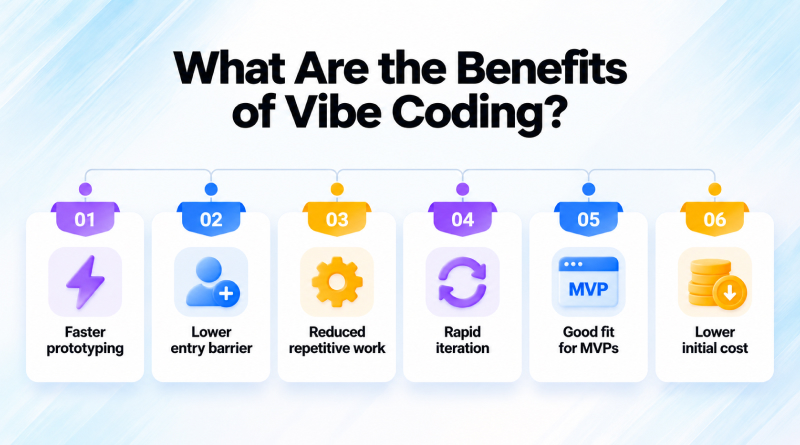
Vibe coding earns its place through a specific set of advantages, most centered on speed and accessibility rather than long-term structural depth. Small teams, tight deadlines, and early product bets tend to lean on this method the most, and the six points below explain why.
Related Read : Best Vibe Coding Tools & Platforms
What Are the Benefits of Traditional Coding?
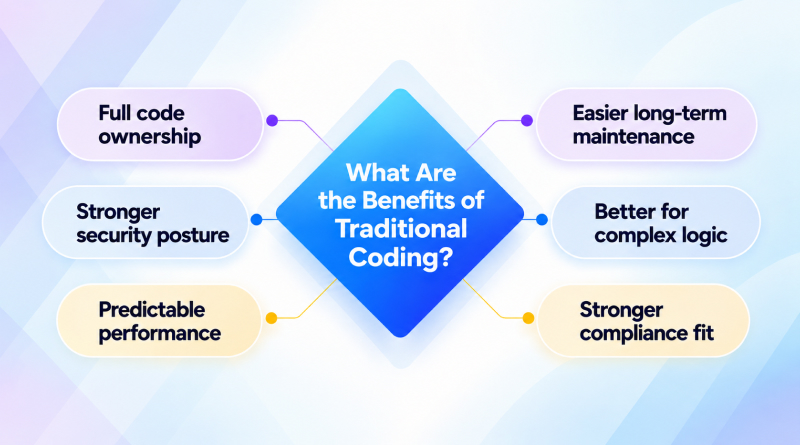
Traditional coding remains relevant in modern development for reasons beyond simple familiarity. Teams that are building systems intended to last, scale, or carry real responsibility still choose manual, deliberate development because it provides benefits that a generated first draft typically cannot offer.
When Should You Use Vibe Coding?
Certain project types consistently get more out of an AI-first approach than a fully manual one, mainly when speed and accessibility outweigh long-term architectural depth. The list below covers where vibe coding tends to deliver the strongest results.
When Is Traditional Coding a Better Fit?
Some projects call for manual precision from the very first line, mainly where a mistake costs more than any time saved through faster generation. The list below outlines the situations where manual precision is most consistently required.
What Sets Vibe Coding Apart From Traditional Coding?
Beyond process and philosophy, the two approaches diverge sharply once measured against specific technical criteria. The table below shows those differences directly, across the factors that matter most when choosing between them.
Vibe coding security is worth a closer look here. Generated code often carries patterns pulled from public repositories, and some of those patterns are outdated or genuinely insecure. A manual security pass before production deployment closes that gap, and it stays worth doing regardless of how the original codebase got written.
Which Approach Fits Your Project?
The decision typically hinges on three key factors: the complexity of the underlying logic, the sensitivity of the data involved, and the required reliability of the system’s operation over time. A quick internal tool with low stakes and a short lifespan suits vibe coding well. A customer-facing platform handling payments, health records, or personal data suits traditional coding, or at minimum, a traditional review layered carefully on top of AI-generated groundwork.
Many teams now run both methods together rather than choosing one exclusively. Vibe coding for beginners and early-stage builders often serves as the fastest route to a testable version, after which experienced engineers step in to refine, secure, and scale the result for production. That hybrid workflow, weighing prompt-generated output against manually written alternatives, has become standard practice among teams running a thorough vibe coding comparison before committing fully to either method.
How Does MilesWeb Support Vibe Coding and Traditional Coding?
Both approaches eventually need infrastructure to run on, and that need doesn’t disappear once the code is finished. A cloud VPS environment gives AI-generated prototypes room to run test builds without waiting behind shared server queues, which matters directly when iteration speed defines the entire point of vibe coding as a method. MilesWeb also brings vibe coding directly to non-developers through its AI website builder, which lets anyone describe what they want and get a working website in minutes, without touching a line of code.
Traditional coding projects benefit from the same infrastructure category for a different reason. MilesWeb’s VPS hosting plans deliver dedicated resources, scalable configurations, and consistent uptime, which supports the longer testing and staged deployment cycles manual development typically requires. Whether a team launches an AI-assisted MVP within days or a fully hand-built platform over several months, the hosting layer underneath needs to keep pace with how quickly, or how deliberately, the codebase above it changes.
Concluding Insights
Vibe coding and traditional coding are not competing philosophies fighting for the same territory. They are two distinct tools, each suited to a different stage of a project’s life and a different tolerance for risk. Prototypes, internal tools, and early product experiments favor vibe coding, since speed and accessibility count for more than architectural depth at that stage. Once a product has to hold up under real users, real data, and real consequences when something goes wrong, precision, security, and long-term maintainability shift the balance back toward traditional coding.
Is vibe coding the future of software development, or a transitional phase that settles into a smaller, more specific role as AI tooling matures further? The more likely outcome sits between those two extremes. Development teams are converging on a workflow where prompting handles the first draft and structured human engineering handles everything that needs to last, and the teams that learn to move between both approaches deliberately will build faster without building on unstable ground.
Frequently Asked Questions
1. What is vibe coding?
Vibe coding is a software development approach in which a developer describes the desired outcome in plain language and an AI model generates the code. The developer runs the result, reviews its behavior, and requests refinements, guiding the work by outcome rather than by writing each line manually.
2. What is traditional coding?
Traditional coding is the hands-on process software teams have always used. Someone plans the architecture, writes the logic by hand, tests each component, and reviews it before release, with a developer thinking through every decision rather than letting a model guess the next line.
3. Is vibe coding better than traditional coding?
It depends on what’s getting built. Vibe coding gains a clear edge in speed when building prototypes and small tools. Traditional coding pulls ahead on security, precision, and holding up over years, which counts for more on systems built to run long term.
4. Does vibe coding require programming knowledge?
It helps, but nobody needs profound syntax knowledge to get started. A clear, specific prompt does more work than technical expertise, though knowing the basics makes it a lot easier to spot when the model gets something wrong.