Sommaya Singh

WordPress, Drupal, and Joomla are popular content management systems (CMS) that nudged the future of no-coding. Hence, web hosting servers are aligning with the evolved digital ecosystem by offering an optimized hosting environment for seamless operations.
Choosing the right CMS hosting provider determines the efficiency of your no-code stack. The underlying service providers support headless CMS architecture, where your data is secured in a reliable hosting environment.
Table of Content
What is CMS Hosting?
CMS hosting is an optimized hosting environment engineered to run CMS software and applications. You get a pre-configured environment for PHP versions, database responsiveness, and caching mechanisms. You manage users, install plugins, and publish pages from a dashboard rather than doing them all separately.
Not many CMS hosting options are built for a single platform like managed WordPress hosting, but there are plans that combine several systems on the same server. In any case, a successful setup will include automatic updates, timely backups, security scans, and sufficient resources to keep page loads speedier as content grows. If you want to start a blog or business website or online store without becoming a server administrator, a CMS hosting plan is usually the easiest place to start.
Top CMS Hosting Providers: Quick Breakdown


1. MilesWeb
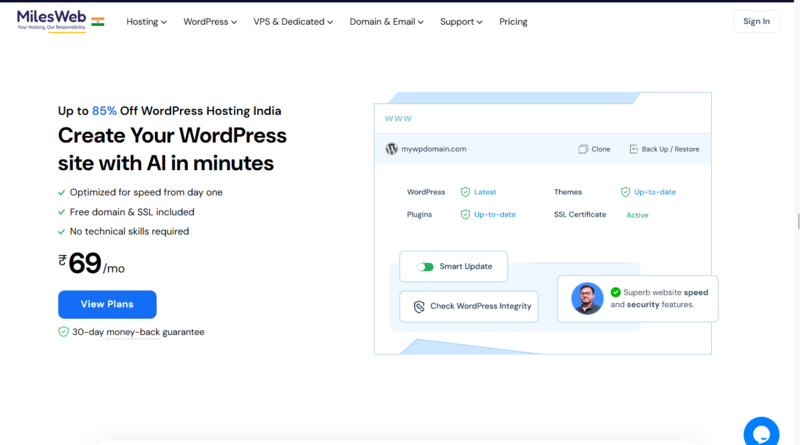
MilesWeb offers you CMS-ready web hosting plans featuring managed support, AI website builder, and Apache nameservers. Get the automatic CMS updates to handle the maintenance, allowing you to focus on content management. Furthermore, use a staging framework to save your development cycle for CMS frameworks such as WordPress, WooCommerce, Drupal, and Joomla. It lets users preview the last version before they go live with the website. MilesWeb also lets you install themes and plugins from the directory itself in all its CMS hosting plans. Overall, MilesWeb is a good pick for growing ecommerce stores and blogs.
Key Features
- 1-click installation
- Daily backups
- Free domain, SSL & email
- 24-hour malware scans & removal
2. Hosting.com
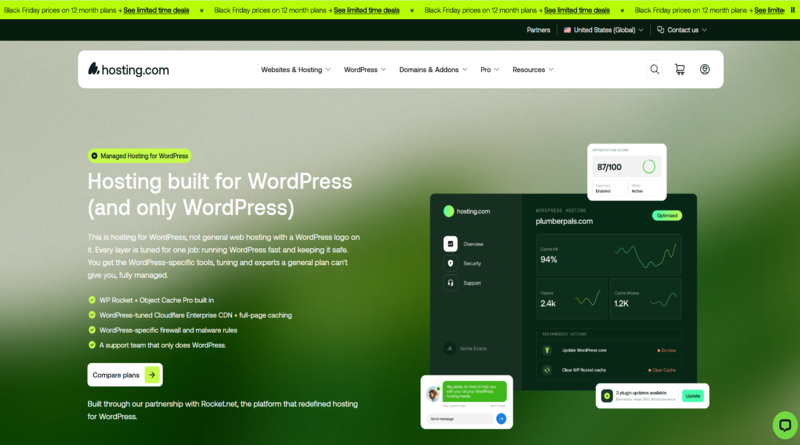
Hosting.com offers a stacked CMS hosting plan optimized for various CMS frameworks. The web host covers CMS through its shared and dedicated WordPress plans, including WooCommerce hosting. Their hosting infrastructure features a free domain, free SSL, daily backups, malware detection and removal, an AI website builder for WordPress, and free managed migration. Their plans offer 24/7 support from their in-house team, an AI assistant called Orbi that hands off to a person when required.
Key Features
- Free migration
- Premium SSL certificate
- Custom server configuration
- Dedicated hardware
3. Hostinger
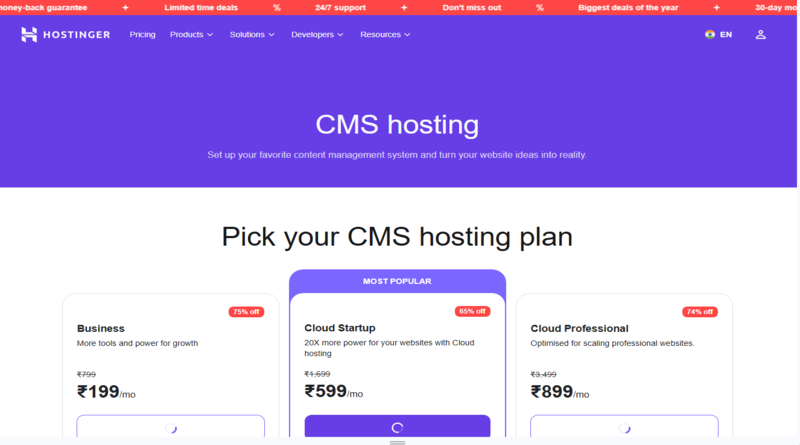
The Hostinger CMS hosting plan supports CMS applications like WordPress, Drupal, and Joomla. MilesWeb also provides free domains, free SSL, daily backups, and free website migration to make your workflow easy, just like Hostinger. They offer cloud-based infrastructure with WordPress acceleration, object caching, staging tools, and managed WordPress features. With a 30-day money-back guarantee and 99.9% uptime, the platform ensures reliability. Best for budget users and small business owners.
Key Features
- Staging tool for WordPress
- Website builder
- Unlimited bandwidth
- Unlimited databases
4. Cloudways
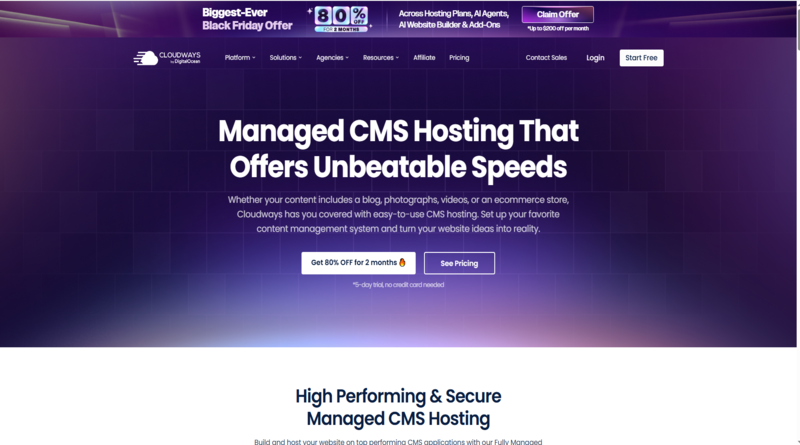
Cloudways remains one of the prominent choices for CMS hosting plans. However, when you compare it with other cloud service providers, MilesWeb, DigitalOcean, AWS, and Kamatera. Bloggers and quick commerce store admins can rely on them, but they may exhaust their budgets, limiting their operational capabilities. Another trade-off is the limited control panel option (cPanel), which restricts other users from controlling administrative tasks.
Key Features
- Free SSL and strong security tools
- Staging websites for safe testing
- Scalable infrastructure
- No long-term contract required
5. OVHCloud
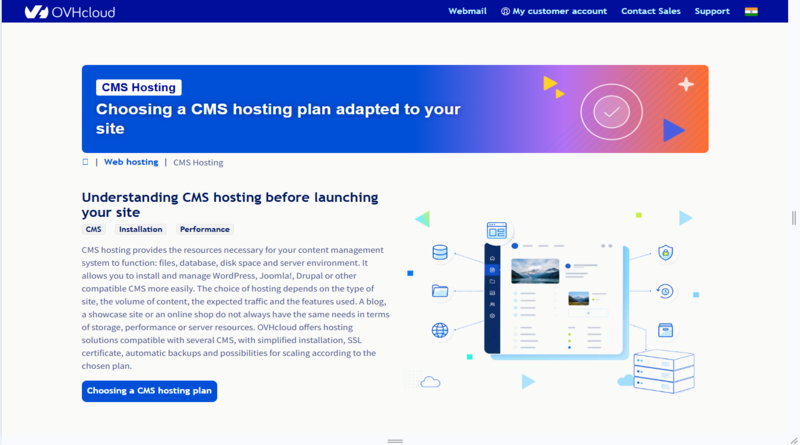
OVHCloud supports many CMS platforms. Getting started is easy, and you get SSL certificates, automated backups, and the ability to scale depending on the plan you choose. They offer CMS hosting for fast deployment of the most popular platforms like PrestaShop, WordPress, Drupal, and Joomla. OVHcloud CMS hosting plans include automatic backup and free SSL. We looked at the pricing tiers, and they were at the bottom of our list. Hardware specifications are hampering the growth of online stores.
Key Features
- Email accounts included
- Free domain name
- Clear billing cycle
- 1-click installation
Benefits of CMS Hosting
- Easy to Use & No-Code Management: Intuitive dashboards to publish text, images, and video without custom HTML or code.
- Updates and Maintenance Handled: Your hosting company takes care of the back-end of the server, including platform updates, security patches, and general maintenance.
- Security: SSL support, firewalls, DDoS protection and scheduled website backups are included. Your data is protected with automatic backups.
- Lower Maintenance Cost: No need to wait for the web developers for daily edits of website content. That saves a lot of money in maintenance in the long run and gets you to launch faster.”
- Scalability: Scalable infrastructure can be easily scaled to accommodate growth in traffic and number of pages with high-bandwidth SSD storage systems, load balancers, and scalable resource allocation.
Conclusion
Selecting the right CMS hosting provider involves a lot of research, hardware requirements, and technical specifications. A blogger or small business will be comfortable with an affordable plan that offers 1-click installs, free SSL, and daily backups. An online store or fast-growing website, in contrast, needs more RAM, caching, and regular upgrades. Whichever CMS you use, whether WordPress, Joomla, or Drupal, compare the things affecting daily life.
Look beyond the introductory price, too. Several providers advertise a low first-term rate, then charge extra at renewal, and features like free domain apply to certain plans only. MilesWeb offers the money-back period to test real-world speed and support with your website. Get access to their staging environment to test the real-time preview, speed, and intuitiveness.
FAQs
1. What is CMS hosting?
CMS hosting is web hosting built to run content management systems like WordPress, Joomla or Drupal. It comes with the right PHP version, database support and one-click installers, and often caching, backups and security tools, so you can manage your site without wrestling with server files.
2. Is CMS hosting suitable for WordPress websites?
Absolutely. WordPress is the most widely used CMS, and CMS hosting plans are orchestrated with one-click installs, automatic updates, staging and caching.
3. How do I choose the best CMS hosting provider?
Start with the basics: uptime guarantees, resource limits (RAM, CPU and storage), backups, security and how easily you can upgrade as your site grows. Compare the renewal price, not just the introductory rate, and use the money-back period to test the host’s speed and support before you commit.
4. Is CMS hosting suitable for business websites?
Yes, CMS hosting is great for corporate sites, blogs and internet shops. Just make sure your plan has enough resources and solid security (daily backups, SSL and reliable support) and room to grow. Managed plans can also handle traffic spikes without impacting performance if you are likely to have traffic spikes.