
 Gaurav Bodhare
Deciding on a database architecture often feels like choosing the foundation for a skyscraper; once the concrete sets, the structure depends entirely on that initial choice. Most generic guides treat the PostgreSQL vs MariaDB debate like a feature-parity checklist, but in a production environment, the differences are tangible. You are deciding between a system that enforces uncompromising schema validation and one built for the raw, horizontal speed demanded by modern web traffic. This guide moves past the surface-level comparisons to explore how these two titans manage modern workloads and why your decision impacts the long-term trajectory of your application.
Your preference for MariaDB hosting or PostgreSQL hosting determines how your backend survives a sudden traffic spike or a complex recursive query. High-performance cloud hosting provides the IOPS and low-latency disk access these databases need to maintain peak throughput. When you match your data strategy with a high-bandwidth infrastructure, you stop fighting hardware bottlenecks and start focusing on your code.
A premium web hosting setup acts as the stress-test environment where these engines either thrive or fail under load. Whether you’re scaling successful startups or managing complex, multi-terabyte datasets, the way your database engine communicates with your server hardware is the single biggest factor in your perceived website speed. If those two aren’t in sync, no amount of query optimization will save your user experience.
Table Of Content
PostgreSQL vs MariaDB: At a Glance
Stop looking for a “winner” and start looking at your data structure. PostgreSQL wins if you have complex, deeply nested relationships and need absolute reliability for analytical queries. MariaDB, a drop-in replacement for MySQL, focuses on speed, ease of use, and a wide array of specialized storage engines. PostgreSQL is the precision tool for engineers; MariaDB is the high-velocity engine for rapid growth.
What is PostgreSQL?
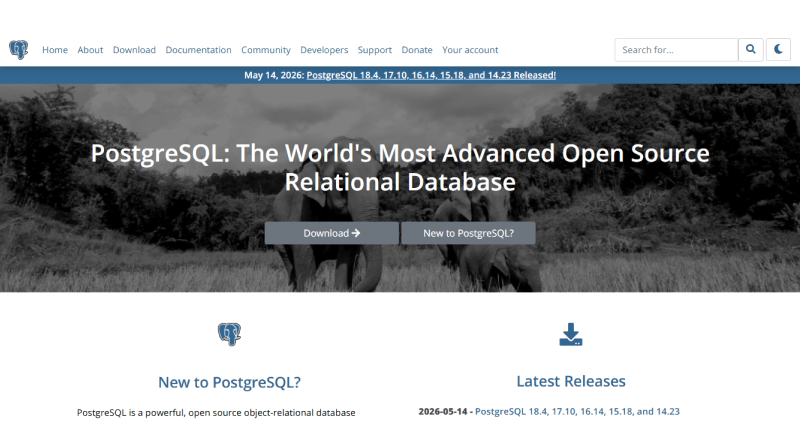
PostgreSQL stands as the most advanced open-source relational database system in the world, built on a legacy of over 30 years of development. It lets you build custom data types and complex functional logic right into the schema. For teams that need to build investor trust through absolute data consistency and rock-solid ACID compliance, PostgreSQL is the only serious choice. It handles heavy concurrency without the data corruption risks that compromise less stable architectures.
What is MariaDB?
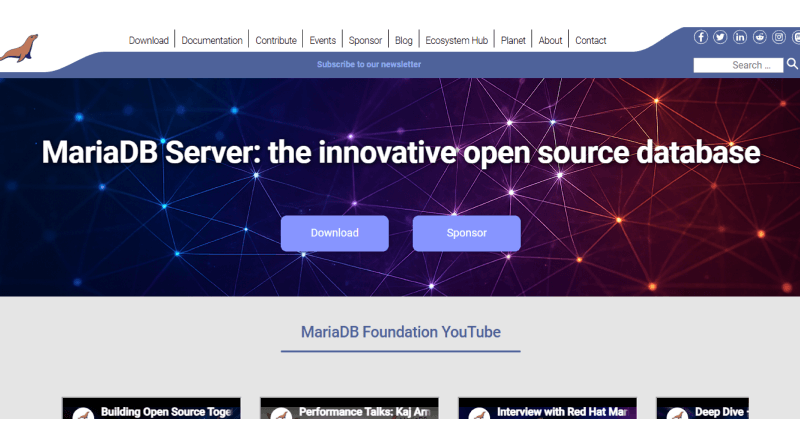
MariaDB was established to provide a high-performance, open-source branch for those who prefer the MySQL ecosystem without its commercial restrictions. It is a great fit for those who want to build without hiring a specialist to manage every technical detail. The familiar syntax and extensive community resources mean you can launch your project quickly, finding immediate solutions to any hurdles without the need for complex, manual fine-tuning. It brings unique storage engines like ColumnStore for analytics and MyRocks for flash-optimized storage, making it incredibly versatile for standard web applications that need to scale out, not just up.
What Are the Key Differences Between PostgreSQL and MariaDB?
The divergence between these two appears when you look at data extensibility. PostgreSQL treats every entry as a first-class object, offering native, high-speed support for JSONB, arrays, and geometric data.
MariaDB remains focused on the relational model. Its real strength is at the storage layer, where you can switch engines based on whether you need to archive data or handle heavy write traffic. These internal choices dictate how easily you can deploy OpenClaw plugins or specialized backend extensions.
How Does PostgreSQL vs MariaDB Performance Compare?
In high-pressure environments, PostgreSQL vs MariaDB performance comes down to how they manage connections. PostgreSQL treats every connection as a standalone unit, ensuring a single resource-heavy query won’t trigger a total database collapse.
MariaDB leans on a lightweight threading model, which stops your RAM from redlining when thousands of people hit the server simultaneously. Your Linux hosting setup needs to handle these differences so your CPU doesn’t max out when traffic spikes.
PostgreSQL vs MariaDB: Who Wins on Speed?
A direct comparison of MariaDB vs PostgreSQL speed is often misleading. MariaDB usually wins on simple “select” and “insert” tasks—the kind of stuff that powers a basic blog or e-commerce website—because its optimizer is lean.
PostgreSQL takes the lead the moment things get complicated. If you’re running deep joins or analytical reports, its optimizer reorders operations and uses parallel execution to finish tasks that would hang MariaDB.
PostgreSQL vs MariaDB: Which is Better?
Deciding whether PostgreSQL is better than MySQL or MariaDB depends on your role. Data scientists and financial engineers choose PostgreSQL for its window functions and CTEs. Web developers usually stick with MariaDB or MySQL because they anchor the “LAMP” stack and integrate perfectly with almost every CMS on the market. MariaDB is a straightforward choice for VPS hosting, but PostgreSQL is the better fit when your data needs strict accuracy.
Which Use Cases Are Better for PostgreSQL or MariaDB?
PostgreSQL is the gold standard for PostGIS (mapping), fintech, and AI-driven platforms that need structured, reliable data feeds. MariaDB is the workhorse for e-commerce, high-traffic blogs, and general-purpose apps where speed and horizontal scaling are the goals. If you’re experimenting with Ollama models or other AI tools, PostgreSQL’s advanced indexing makes it much easier to feed structured data into your local LLM.
Choose PostgreSQL if:
- You’re running massive JOINs across dozens of complex tables.
- You need native, high-performance JSONB or XML support.
- Your business logic demands strict SQL compliance.
- You need the right hypervisor setup to isolate database tenants for security.
- You’re building anything involving heavy Geographic Information Systems (GIS).
- You need parallel query execution to handle real-time reporting.
Choose MariaDB if:
- You’re coming from a MySQL background and want zero migration friction.
- Your primary metric is raw read/write speed for simple queries.
- You need to swap storage engines to match specific hardware.
- You’re running a standard WordPress or Drupal website.
- Your team needs a shallow learning curve to get moving fast.
- You’re using an AI website builder that expects a standard MySQL-style backend.
How Do PostgreSQL and MariaDB Handle Scaling and Flexibility?
PostgreSQL scales up with high-end hardware, using synchronous replication to make sure every node stays perfectly in sync. MariaDB owns the horizontal scaling space with Galera Cluster, allowing for multi-master setups that remain operational even if a node fails. No matter which you choose, failing to secure your SSL protocols across these nodes makes your entire cluster an easy target. Setting up a powerful server and ignoring encryption is like buying a vault but leaving the door wide open.
Which Database Offers Better Security and Reliability?
PostgreSQL is objectively more precise with data types and permissions. It is a reliable choice for business email databases or sensitive client records where an inaccurate query could damage a table. MariaDB has advanced considerably in security with better defaults and encryption plugins and supports various encryption plugins to ensure that your data remains safe from unauthorized access at the storage level.
Is PostgreSQL or MariaDB Better for Web Hosting?
For most developers, the decision within a web hosting environment centers on hardware efficiency and software ecosystem alignment. MariaDB is the default for many control panels because it consumes fewer resources on entry-level servers, allowing more room for other application processes. PostgreSQL is more of a “resource-hungry” system, but it uses those resources to provide a level of data consistency and query power that simpler systems cannot match.
Related read: PostgreSQL vs MySQL: The Ultimate Comparison for Developers
How Difficult Is the Learning Curve for PostgreSQL vs MariaDB?
MariaDB is a go-to for beginners because the syntax is forgiving and the documentation actually focuses on things you’ll do in the real world. Postgres is a steeper climb since it’s massive and takes a much more formal approach to database management. However, mastering PostgreSQL means you can often replace 500 lines of complex application code with a single, elegant SQL query.
What Are the Pros and Cons of PostgreSQL vs MariaDB?
PostgreSQL: This advanced relational database focuses entirely on data precision and executing complex query structures under heavy operational stress. PostgreSQL serves as an enterprise-grade relational engine designed for heavy data loads and strict accuracy.
| PostgreSQL Pros | PostgreSQL Cons |
|---|---|
| Handles complexity easily | Hungry for RAM |
| Unmatched data integrity | Requires a more experienced admin |
| Huge feature set | Slower bulk inserts |
Related Read: PostgreSQL Alternatives: The Best Relational & NoSQL Databases
MariaDB: For web applications that require rapid deployment and high-speed read operations, a lighter alternative is often necessary. MariaDB provides an open-source, community-backed relational system built for speed and seamless scaling.
| MariaDB Pros | MariaDB Cons |
|---|---|
| Blazing fast for standard web apps | Struggles with massive analytical joins |
| Easy to scale; familiar | Less strict with data rules |
| Efficient thread pooling | Limited advanced indexing |
Which Features Set PostgreSQL and MariaDB Apart?
Evaluating your database options requires analyzing how each system isolates workloads and manages structural scaling. While both options store relational records, their internal storage engines and indexing methodologies create major differences in day-to-day performance.
| Feature | PostgreSQL | MariaDB |
|---|---|---|
| Data Structure | Object-Relational (Advanced) | Relational (Standard) |
| JSON Support | Native JSONB (High Performance) | JSON via Longtext/Functions |
| ACID Compliance | Fully Compliant (Strict) | Fully Compliant (Flexible) |
| Scaling | Vertical & Complex Horizontal | Excellent Read Replicas |
| Security | Premium features often require a license | Full security features included by default |
| Concurrency | MVCC (Better for Heavy Writes) | Thread Pooling (Better for Many Reads) |
PostgreSQL vs MariaDB: Which One Should You Choose?
The decision ultimately rests on the nature of your data’s journey. If you’re building a simple, high-speed web app that needs to scale wide, MariaDB is your workhorse. If you’re building a complex, data-heavy platform where accuracy is non-negotiable, PostgreSQL is the only architectural choice that makes sense. Matching your database to these technical needs ensures your infrastructure helps you grow instead of becoming a bottleneck later.
Concluding Insights
Database tech has moved past the stage where you risk making a “wrong” choice. It really hinges on finding the right fit for what you are actually building. Whether you need the deep relational structure of PostgreSQL or the fast, adaptable nature of MariaDB, both are reliable enough to run any modern website.
When your project involves high-stakes data—like financial transactions, healthcare records, or complex AI models—PostgreSQL is usually the non-negotiable choice. Getting these details right early on means your project won’t fall apart when things get more complex or your traffic spikes later.
Pick the tool that matches your team’s skill level and your data’s complexity, then choose a provider like MilesWeb to provide the high-performance infrastructure required to let that engine deliver top-tier performance. By choosing hardware optimized for your specific database, you stay ahead of performance lags as your project scales.
FAQs
1. When should you choose MariaDB over PostgreSQL for your project?
Choose MariaDB if you are running a high-traffic WordPress site or an e-commerce store. It is built to handle heavy “read” traffic without much complexity, and unlike Postgres, you won’t need a specialized admin to keep the performance from dropping as you scale.
2. What security features are available in PostgreSQL vs MariaDB?
PostgreSQL gives you enterprise-level security, which is a lifesaver if you need to lock down specific data rows within a single table based on the user. MariaDB is more basic; it relies on global permissions and standard encryption, which works for a blog but lacks the surgical precision needed for complex apps.
3. Which database is easier to learn: PostgreSQL or MariaDB?
MariaDB is much easier because it’s adaptable and works like traditional MySQL. PostgreSQL is strict; if your syntax isn’t perfect or your data types don’t match exactly, the query just fails. It forces you to be a better coder, but the start is difficult.
4. How do PostgreSQL and MariaDB differ in terms of community support and ecosystem?
MariaDB owns the hosting world—every forum and cPanel host supports it. PostgreSQL is the backbone of the dev-ops and data science world, where people build custom extensions like PostGIS for heavy-duty mapping or specialized indexing.
5. Which database has better compatibility with modern frameworks and tools?
Postgres is the clear winner for modern development. Its JSONB support is superior to MariaDB, making it the better choice if you are using Node.js or Django and need to mix structured data with flexible, “NoSQL-style” storage.
6. PostgreSQL vs MariaDB: Which is more developer-friendly?
MariaDB is friendlier for launching a project today. However, PostgreSQL is friendlier for long-term debugging because its error messages actually tell you what went wrong, rather than just throwing a generic syntax error.