
 Gaurav Bodhare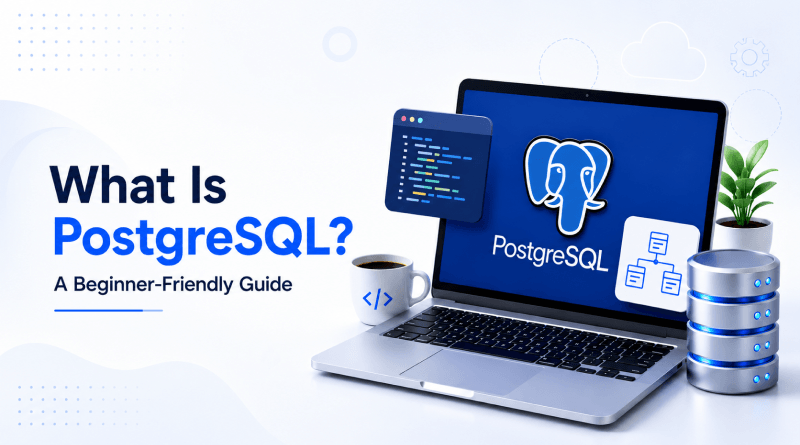
Engineers often overlook the active nature of their database, treating the engine as a static file cabinet rather than a dynamic component of their infrastructure. They initialize the service, only to find the architecture fails under pressure once traffic spikes expose underlying performance bottlenecks. You cannot run a high-concurrency system on default settings and expect it to handle the heavy workload. Real performance is about knowing where the memory buffers live and how to keep the vacuum process from saturating your CPU.
This technical assessment isn’t about marketing fluff or “solutions” that solve everything. It’s about how to actually manage PostgreSQL so it doesn’t become a liability for your stack. In this blog, we are going to explore the internal mechanics—how to tune the configuration, manage the connection overhead, and keep the storage layer from bloating—so you can actually deploy your architecture without worrying about the midnight outages.
Summary (TL;DR)
PostgreSQL manages concurrency by generating new row versions instead of overwriting existing data, a fundamental aspect of its MVCC model. If you ignore the maintenance cycles, those obsolete rows accumulate into dead weight, causing your database to bloat and slowing down your query speeds. You get a reliable system once you dial in your cleanup cycles and stay on top of connection management.
Table Of Content
What is PostgreSQL?
PostgreSQL functions as an object-relational engine tailored for handling precise schemas. It replaces basic file storage, relying instead on system catalogs to track custom types, functions, and heavy-duty indexes. This design lets you embed domain-specific logic right into the data layer, which is how you build for long-term architectural integrity rather than just settling for basic storage.
Related Read: What is PostgreSQL Hosting? Benefits, Types, and Uses Explained
How Does PostgreSQL Work?
When a connection reaches the server, the primary process initiates a dedicated backend process for that session. This creates a wall between users; if one process encounters a memory error or segmentation fault, the core system keeps running. When you execute a query, the optimizer maps out the cheapest way to pull that data from disk or cache, checking the indexes before deciding if it needs to scan the underlying data storage.
What Are The Key Features Of PostgreSQL?
Developers lean on these tools because they provide a way to deal with complex data without sacrificing speed or structure.
- Multi-Version Concurrency Control (MVCC): Multiple users can read and write the same table at once because the engine keeps different versions of the data. No one has to wait in line.
- JSONB Support: You can store semi-structured data and index it like any other standard table column, providing you with similar speed advantages to a tool like MongoDB while maintaining your relational integrity.
- Extensibility: You define the specific types and functions that match your work, allowing the database to adapt to your needs rather than forcing data into a rigid, pre-set structure.
- Point-in-Time Recovery (PITR): If you delete something by mistake, you can roll the entire state back to the exact second before the error occurred.
Related Read: PostgreSQL vs MongoDB: Databases for Modern Applications
What Are The Advantages Of PostgreSQL?
You pick this database because you want to stop worrying about data corruption or inconsistent states. These advantages define why it’s the standard for teams building serious backends.
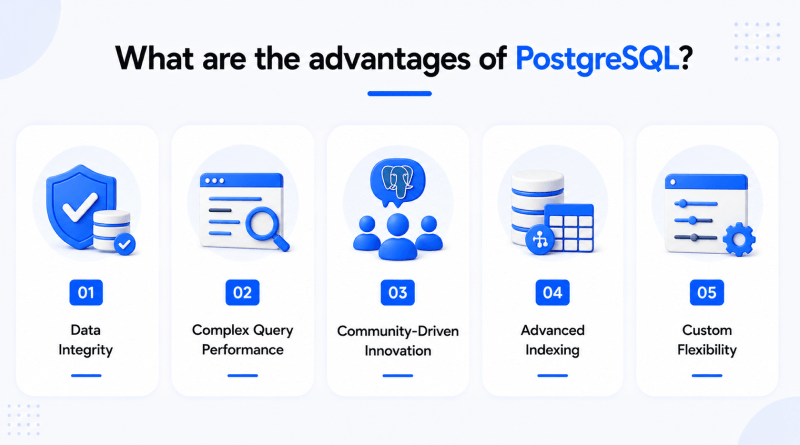
- Data Integrity: ACID compliance means your transactions are atomic—either the entire operation happens or nothing does, which keeps your balance sheets and audit logs clean.
- Complex Query Performance: It handles nested subqueries much better than MariaDB, making it the better choice for data-heavy analytics.
- Community-Driven Innovation: The code base has been so well tested over time, powered by developers, that all edge cases and security vulnerabilities have been addressed prior to you using this product.
- Advanced Indexing: If you are using Minecraft server commands or logging a large number of high-frequency events, having the ability to perform queries against large data sets is an absolute requirement.
- Custom Flexibility: You can create your own data types and functions to fit your specific needs, rather than struggling to force your information into a standard, rigid format.
Related Read: PostgreSQL vs MariaDB: Finding the Perfect Match for Your Cloud Strategy
What Are The Common Use Cases Of PostgreSQL?
PostgreSQL is a robust database solution that provides highly accurate logical and empirical data to support all types of applications ranging from scientific studies to global financial systems. The primary reason why it is used so heavily for financial applications is the ability to create a full audit trail that can be backed up during exceptionally high-pressure circumstances.
There are also many developers working with geographic information systems (GIS) who use PostgreSQL (via the PostGIS extension) to manage map data, track coordinates, and calculate distances. In the field of Enterprise Resource Planning (ERP), PostgreSQL has been used to effectively connect inventory, user roles, and supply chain logistics while often being the primary database behind many ERP solutions such as Nextcloud. High-traffic apps rely on PostgreSQL as their primary data store. Even with massive volumes, these systems still return results in under a single millisecond.
Who Should Use PostgreSQL?
PostgreSQL is for the developer who prioritizes systemic reliability over quick-and-easy UI tools. If your app handles relational data that must stay accurate during huge traffic spikes, this engine handles the load better than most. It’s the standard choice for teams moving from cloud hosting to a custom-tuned VPS hosting environment where they need full visibility of the execution plan.
How to Get Started with PostgreSQL?
Don’t just run the default install. Start by setting up your environment in a container or a managed instance from PostgreSQL hosting providers. Your first move should always be defining primary keys, indexing columns that you actually query, and setting up limited user roles—never run apps as the superuser. If you test your queries against a decent sample size, you won’t have to rewrite your entire schema once you reach production.
What Are The Basic PostgreSQL Commands For Beginners?
You don’t need a heavy GUI to manage your data if you know the core command syntax. These queries cover the daily tasks of database administration.
- CREATE TABLE: Define the blueprint for your data sets.
- SELECT: Pull exactly what you need from the dataset.
- INSERT INTO: Add your records in the tables.
- UPDATE: Tweak existing rows to reflect real-time changes.
- EXPLAIN ANALYZE: Analyze exactly how the engine is reading your query to identify performance bottlenecks in your logic.
What is PostgreSQL Hosting and Deployment?
Your approach to deployment hinges on the level of operational responsibility you are willing to assume. If you choose managed vs. unmanaged PostgreSQL hosting, you’re deciding between having the provider handle the security patching and backups or doing it yourself to keep costs low and control high. Whatever route you take, you need backup plans and redundant storage, because your database is the one part of the stack that cannot stay down.
What are the Security Features of PostgreSQL?
Security starts with basic common sense. You use SSL certificate to keep attackers from intercepting your traffic during transmission. By setting up strict role-based access control, you lock down the tables so that a compromised service can’t access sensitive areas of your schema, protecting your info like a private Google Drive alternative.
What Are The Common Challenges And Limitations?
The biggest complexity is “bloat,” where old, deleted rows take up space until the vacuum process cleans them up. You have to monitor your autovacuum settings or you’ll run out of disk space for no reason. It also doesn’t shard automatically, so when you reach the limits, you have to use connection pooling to keep your application performance sharp.
Which Database Should You Choose For Your Project?
PostgreSQL expects data to follow a structure, which is very different from the more flexible approach used by many NoSQL databases. Deciding between them involves balancing transactional reliability against the horizontal scaling needs of your application. Examining those technical trade-offs is the best way to land on an architecture that actually works for your infrastructure.
| Feature | PostgreSQL | MySQL | MongoDB | SQLite |
|---|---|---|---|---|
| Data Model | Relational Data | Relational Data | Document Store | Relational Data |
| ACID Rules | Strict Compliance | Standard Compliance | Tunable Levels | Strict Compliance |
| Setup Level | High Complexity | Low Complexity | Low Complexity | Minimal Setup |
| Best Usage | Complex Analytics | Web Hosting | Dynamic Schemas | Local/Embedded |
| JSON Support | Native/Advanced | Basic Support | Native Advanced | Basic Support |
| Deployment Type | Server Deployment | Server Deployment | Server Deployment | Serverless File |
| Scaling Type | Vertical Horizontal | Vertical Scaling | Horizontal Scaling | N/A (Local) |
Closing Insight
PostgreSQL isn’t just a container for your raw data—it’s a tool for engineering precise, long-term data stability. Once you master the indexing and vacuum patterns, the system basically runs itself.
Prioritize your database architecture from day one. Tuning your buffers and monitoring query plans now avoids the need for a total system overhaul later.
Regular maintenance and sharp monitoring keep it as a high-performance core for your infrastructure. It’s the backbone of your backend, designed to handle whatever you push its way for years to come.
FAQs
1. Is PostgreSQL free for both beginners and businesses?
Yes. You get every feature without cost under the PostgreSQL license. Whether you’re starting a side project or scaling a company, you won’t encounter any licensing fees.
2. How secure is it for storing sensitive data?
It’s the go-to for finance and healthcare. PostgreSQL is designed for environments where a data breach isn’t an option, using a long history of deep security audits and tight control over what every user can do.
3. Can it handle large-scale databases and high traffic?
This engine is built for heavy lifting. It remains responsive as your data grows into terabytes, which is why platforms that require zero downtime depend on its performance under constant, heavy load.
4. Is it easy to learn for someone with no database experience?
Starting out is simple enough, but you will need to dedicate yourself to the process if you want to reach a high level of technical skill.