Sommaya Singh

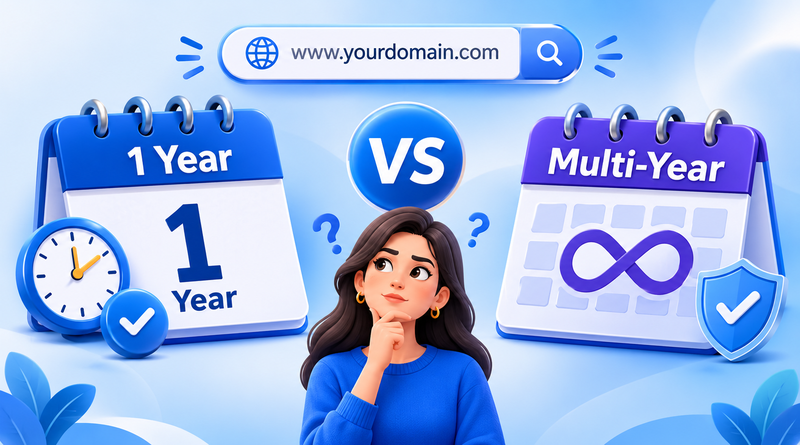
Domain registration is one of the core processes for building your online presence. However, during checkout, most domain name registrars nudge you towards longer-term registrations. You can register for three, five, or even ten years; they say you can save money and would never think about renewals.
While this may be true, it is not the best approach for every domain. A name you test for a side project has different requirements from one your entire business runs on, and the term you choose affects your upfront cost, the flexibility, and how likely you are to lose the domain accidentally.
The guide compares 1-year and multi-year registrations simultaneously, covering the real pros and cons, the costs to look for, and whether registration length affects SEO. You will get a simple checklist to decide. If you need detail on the specific cases, explore this guide.
Table of Content
How Do Domain Registration Terms Work?
When you register a domain, you are really leasing it for a specific timeline. Most registrars set the minimum term annually and allow registrations for up to ten years. The upfront cost is very little so just go for yearly renewal. MilesWeb has renewal rates on generic domain extensions that suit your budget.
If you miss the expiration date, the domain will not disappear instantly. It enters the domain redemption period and you get a grace period to renew for the same cost. After that period, the domain is permanently released into the public.
Also Read: Domain Auto-Renewal
Pros and Cons of a 1-Year Registration
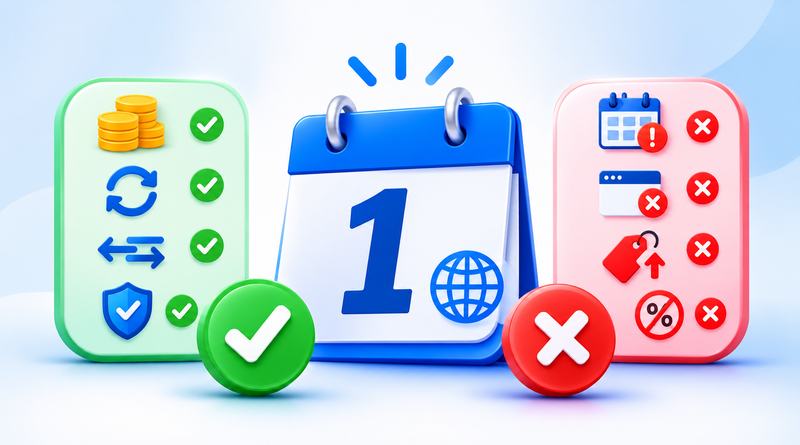
Pros
- Lower upfront costs: Good for a short-term project or if you want to test out an idea you’re not sure about.
- Flexibility: If the project doesn’t pan out, you can let the name expire rather than paying for years you don’t use it.
- Easy to change registrars: Locked in for just a year, so easy to switch to a better price/support provider.
- Suitable for low risk trials: This is a good option for campaigns, side projects, and unknown extensions where you want to see what they can do.
Cons
- Annual renewal risk: You can lose a domain if you pay in the wrong place, your card expires or you never get an email.
- If expired: Your website and email may stop working. Urgent need to disrupt It could cost more to get it back up later.
- Potential price increases: Introductory prices go up on renewal, so the second year can cost a lot more.
- No multi-year discounts: You won’t get the sale pricing available with longer terms.
Also Read: How to Recover an Expired Domain During the Redemption Period?
Pros and Cons of Multi-Year Registration
Pros
- Less renewals to miss: One thing you have to remember is to reduce the chance of losing the domain by mistake.
- Price lock: Where offered by the registrar, you lock in the current price and avoid increases in renewal for term length.
- Sale discounts: Longer terms come with Black Friday and other promotions, which means you can save more money upfront.
- Peace of mind for core domains: Ideal for your business name or any domain related to email, customer accounts, or live websites.
- Low-maintenance setup: Perfect for sites you want to operate without the thought of renewal dates every year.
Cons
- Higher upfront cost: You will be paying for many years in one lump sum which will stretch a tight budget.
- Money locked in an untested name: Should the project go awry or you shift gears, you might have paid for years of inactivity.
- Refunds are limited: You will not be refunded for unused years, so check the registrar policy.
- Less flexibility: If you change registrars or let the name lapse you lose the rest of the paid-for time, unless you transfer the domain name.
Also Read: What Happens If You Don’t Renew Your Domain?
When Should You Choose a 1-Year Term?
A one year domain tenure is a good choice when you are not sure if the domain will generate any return on investment (ROI) or not. This is also true for short campaigns, events or product launches where the domain is only good for a few months. If the project is started, you renew or extend the term; if not, you don’t pay for unused years.
It is also suitable where flexibility matters more than savings. A restricted budget or uncertain cash flow is a good reason to keep upfront costs down and plan to compare renewal prices or switch registrars after the first year. If you hold names, you might sell or drop; a short-term limit limits the risk.
Also Read: Domain Transfer Checklist
When is a Multi-Year Term the Better Choice?
A multi-year term is the best choice while the domain is central to the business. Your primary domain, or any name linked to email, consumer accounts, invoices, and live website, is expensive to lose. Fewer renewals mean fewer chances of missing one because of an expired card, an unread email, or a busy month.
Cost and convenience point the same way. Sale seasons like Black Friday offer discounts in longer terms, and some registrars let you lock the current price for years you pay for. It protects you from surprising renewals during the period. A multi-year term waives off the maintenance burden from registrants.
Conclusion
There is no universally right answer in the 1-year vs. multi-year debate, only the right fit for each domain. A one-year term suits tests, campaigns, and uncertain projects, where flexibility and low upfront cost matter.
A multi-year term suits the name you are confident about, such as main brand, email, and consumer-facing domains, where fewer renewals and possible price protections are worth the larger upfront payment. The registration tenure won’t alter your rankings, so decide based on budget, risk, and convenience, not SEO.
Whichever term you choose, a few habits matter more than the number of years. Check the renewal prices before buying, read the fine print on bundles and refunds, and keep auto-renewal to avoid lapses. If you start with one year and the project proves successful, you can extend the registration later. Verify the current terms on your registrar’s official pages, as prices and policies frequently change.
FAQs
1. Can I buy a domain name for only 1 year?
Yes, with MilesWeb, you receive the minimum tenure of domain registration for one year, which can be renewed later. Before you buy, check out our pricing chart to see the renewal price, which could be higher than the first-year rate.
2. Do I have to renew my domain name every year?
If the domain is registered for a longer term, the renewal will take place at the end of that term. Either way, make sure you have auto-renewals on or set up reminders, because a lapsed domain can knock your website and emails offline.
3. What’s the ideal domain name length?
Easier to remember, type, and share: Many try to keep their name to around 6-14 characters, but there are no rules. Avoid hyphens, numbers, and hard-to-spell words and choose a name that fits your brand.
4. How to be an appropriate domain registrar?
Review the renewal rates (not just the initial rate), ICANN accreditation, quality of support, security, and transfer policies. Check the reviews and terms of service to see what features are included, such as DNS management and WHOIS privacy.